What to Plant in September in the Pacific Northwest
September in the Pacific Northwest can feel like the end of gardening season. The tomatoes are ripening, zucchini plants seem determined to take over the world, and the first fallen leaves are beginning to remind us that summer won't last forever.
But don't put the garden to bed just yet.
Here in Western Washington, September is actually one of my favorite times in the garden. The cooler days bring a completely different rhythm, and there are still things we can plant now for fall harvests, winter gardens, and an earlier start next spring.
At Rainfall Roots, we garden in the Pacific Northwest in USDA Zone 8b. Our relatively mild winters give us opportunities that gardeners in colder parts of the country don't always have—but our short winter days and very wet weather bring challenges of their own.
Here's what we're thinking about in the September garden.
First, a Little About Zone 8b
USDA Zone 8b means that the average annual extreme minimum winter temperature falls between 15°F and 20°F.
But your USDA zone doesn't tell the whole gardening story.
Western Washington's cool maritime climate, wet winters, summer drought, local frost dates, drainage, elevation, and even the little microclimates around your property can make a huge difference.
That's why we use Zone 8b as a starting point while paying close attention to what actually happens in our own garden.
We plant in garden bags. They are reusable, drain well, and store away easily without taking up room.
We start seeds in seed started trays.
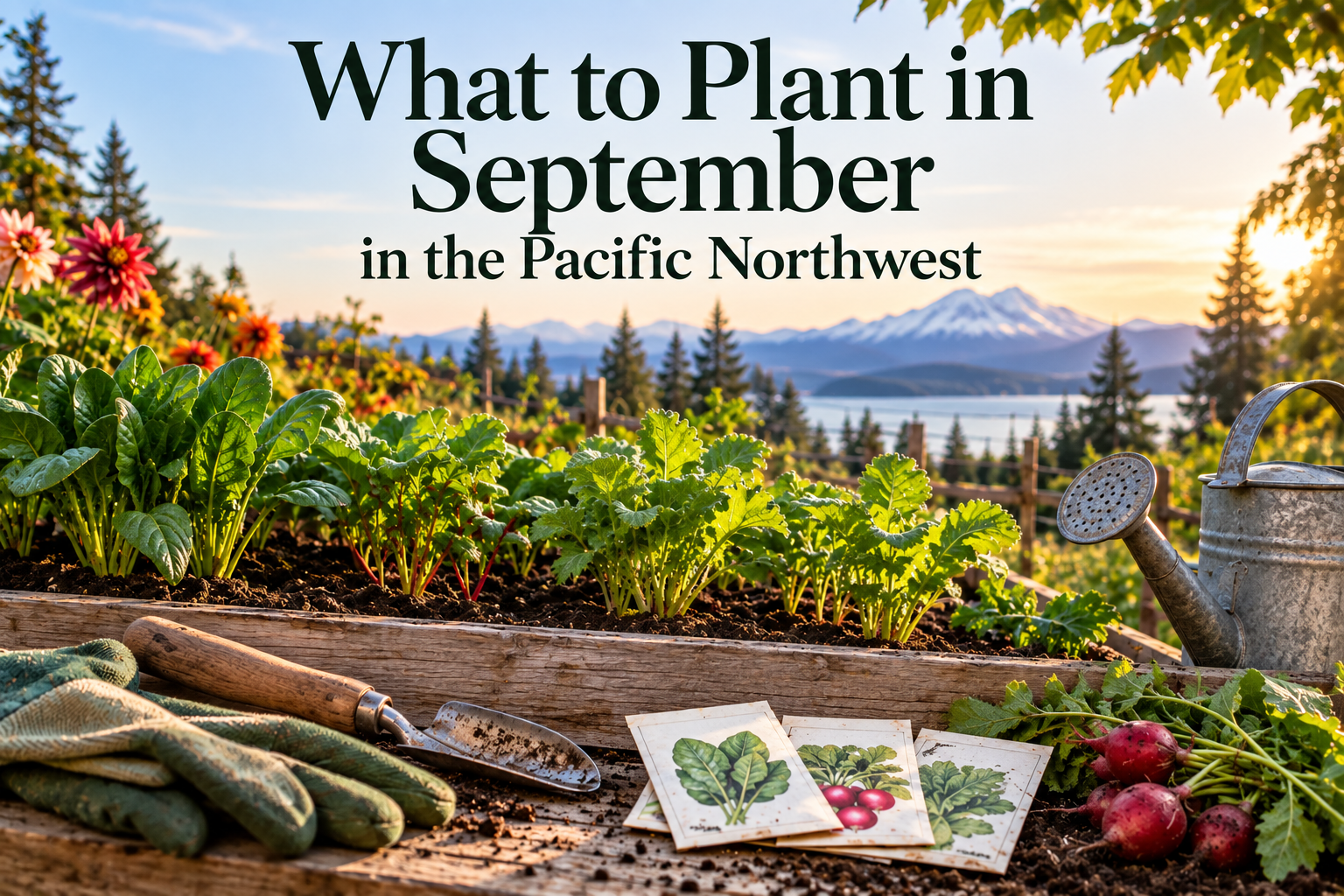
Spinach
September is a great time to think about spinach.
Spinach loves cooler weather, and a September planting can overwinter for an early spring crop in Western Washington.
If you're planting later in the month, don't expect enormous plants before winter. The goal is often to get plants established before our days become very short.
Once daylight drops significantly in late fall, growth slows dramatically. Those little plants can wait patiently through winter and take off again as daylight returns.
For better results, consider protecting them with a row cover or low tunnel during particularly cold or wet weather.
Radishes
If you're looking for something fast and satisfying, plant radishes.
Early varieties can be planted into approximately mid-September in Western Washington.
They're especially fun if you're gardening with children because they germinate quickly, don't require a huge amount of space, and give kids something they can actually pull out of the ground relatively soon.
Choose a quick-maturing variety and give it as much sunshine as your fall garden allows.
Mustard Greens
Mustard greens are another cool-season option that can be seeded during September for fall greens.
They're fast-growing, flavorful, and an easy way to keep fresh greens coming from the garden after many of our summer vegetables have finished.
Harvest young leaves for salads or allow them to grow larger for cooking.
Turnip Greens
September is getting late if your goal is big, mature turnip roots, but there's still time to plant turnips specifically for their greens.
Young turnip greens can be harvested and used much like other leafy greens.
This is also a good reminder that gardening doesn't always have to be about producing the biggest possible vegetable. Sometimes we're growing for tender leaves, baby vegetables, herbs, flowers, seeds—or simply the experience of growing something.
Corn Salad
Corn salad, also known as mâche or lamb's lettuce, is a lesser-known cool-season green that's worth discovering.
It can be planted in early September for fall use in Western Washington. It's cold tolerant and produces small, tender leaves with a mild flavor.
If you've never grown it, this could be a fun addition to your fall garden.
Don't Plant the Garlic Quite Yet
September is when garlic starts appearing in garden centers, and it's tempting to get those cloves into the ground immediately.
In Western Washington, though, we can wait.
Washington State University recommends planting garlic in late fall, with November being an appropriate planting period for Western Washington.
Use healthy seed garlic intended for planting rather than grocery-store garlic, and choose a sunny location with good drainage.
Our wet winters make drainage especially important.
So buy your seed garlic now if you find a variety you love—but you don't necessarily need to plant it yet.
September Is Also Cover-Crop Season
Not every empty garden bed needs another vegetable.
If a bed is finished producing for the year, consider planting a cover crop instead of leaving the soil bare all winter.
Cover crops can help reduce erosion, suppress weeds, conserve nutrients and eventually add organic matter back into your garden.
Crimson clover and vetch are among the cover crops commonly used in Western Washington gardens.
Think of it as growing something for your soil rather than growing something for your dinner plate.
The Most Important September Garden Job: Look Ahead
September gardening is less about squeezing one more tomato out of summer and more about preparing for what's next.
Take a walk through your garden and ask:
What worked this year?
What completely failed?
What did we plant too much of?
What did we wish we'd planted more of?
Which varieties tasted amazing?
Where did water collect?
Where did plants struggle for sunlight?
These observations are incredibly valuable.
Gardening teaches you quickly that there is no universal calendar that works perfectly for every backyard. Even two gardens a few miles apart can behave differently.
Keep notes. Take pictures. Save seed packets from varieties you loved.
Next year's garden will be better because of what this year's garden taught you.
What We're Doing at Rainfall Roots This September
For us, gardening isn't only about producing food.
It's about understanding where food comes from, caring for the soil beneath our feet, noticing the insects and wildlife that share the garden with us, and giving people opportunities to experience the satisfaction of growing something themselves.
September isn't the end of that process.
It's simply the beginning of another season.
So harvest those tomatoes, enjoy the last zucchini, tuck a few cool-weather seeds into the soil—and don't say goodbye to the garden quite yet.
There's still plenty happening beneath the surface.
Rainfall Roots is a program of Rainfall Ranch Rescue dedicated to gardening, land stewardship, education, and helping people connect with the natural world.